
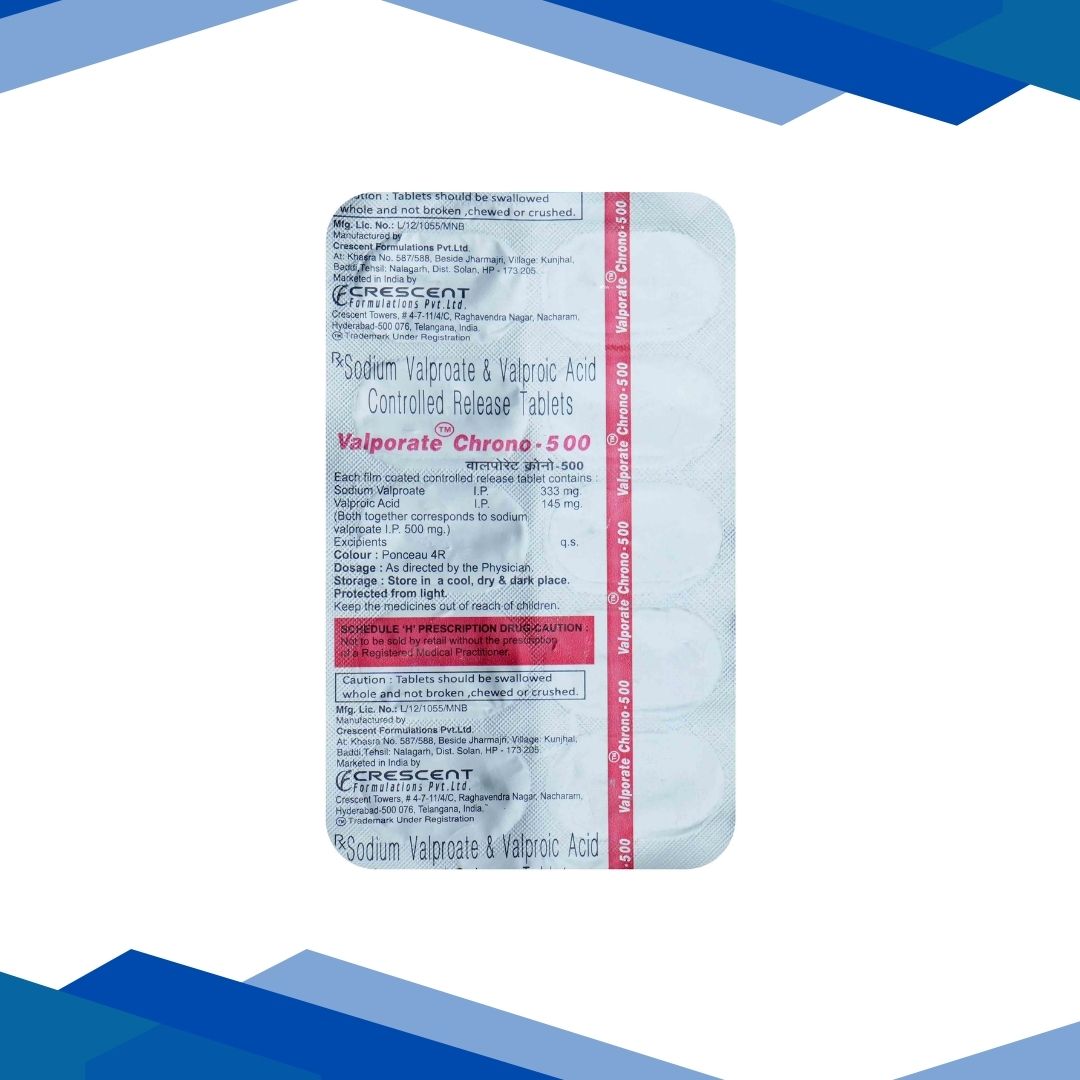
VALPORATE CHRONO 500 Tablet 10’s
No Prescription yet? Don’t worry! Click Here to Get Online Consultation
VALPORATE CHRONO 500 Tablet is a controlled-release medicine used to manage epilepsy and seizure disorders. It helps stabilize abnormal electrical activity in the brain, reducing the frequency and severity of seizures. For more details kindly click on Medicine Salts below:
Sodium Valproate
USES, SIDE-EFFECTS, AND OTHER ADVISE ON SODIUM VALPROATE
Sodium valproate is a drug of wide variety primarily used for its antiepileptic (anticonvulsant) properties which aim to manage various forms of seizures. Apart from epilepsy, specialists believe in using it for mood stabilization in Bipolar Disorders and it is also prevalent in Migraine prevention.
By acting on the chemical messengers known as neurotransmitters within the brain, Sodium Valproate will subsume these excessively high electrical activities to help you reclaim control of your daily life.
📋 Key Benefits & Uses
Seizure Control: Stabilize generalized, focal, and absence seizures by calming down the over-excited nerve cells.
Mood Stabilization: Controls the "highs" (mania) associated with Bipolar Disorder, maintaining an emotional balance.
Migraine Prophylaxis: Lowers the incidence of migraine attacks and reduces their intensity as a daily preventive agent.
💡 How to Use
The following guidelines will initiate the best control:
Regularity: It is imperative that the doses are taken on time every day to keep reliable levels in the blood.
Stomachache Champ: Generally, a mealtime is good; taking the drug during or after food helps to ease stomach upset.
Intact: After you put the tablet in your mouth, it should be swallowed whole without being crushed or chewed; some pills are meant for "sustained release."
Not to Miss Them If You Can Help It: If you forget to take your next dose, your seizure frequency could increase. Once you remember, take your dose unless it's nearly time for the next one.
⚠️ Safety Considerations & Precautions
Do Not Take During Pregnancy: Sodium Valproate is extremely harmful to an unborn baby and should never be used during pregnancy if another treatment option is available. All women of childbearing age must use effective contraception.
Liver Concerns: Your blood must be regularly monitored for liver function by your doctor, particularly within the first 6 months.
Alcohol: Steer clear of alcohol, which can further increase drowsiness and side effects.
Focus: This medicine can make you dizzy or drowsy. Avoid driving or operating heavy machinery until you know how it affects you.
Weight Watching: Some people may experience weight gain. Maintain a balanced diet and stay active.
🩺 Some Side-Effects
While the majority of people tolerate Sodium Valproate, some may experience:
Nausea or mild stomach upset
Mild tremors in hands
Drowsiness or fatigue
Temporary hair thinning
Increased appetite
CONTACT YOUR HEALTHCARE PROVIDER IMMEDIATELY IF YOU NOTICE yellowing of the skin or eyes, severe abdominal pain, or unusual bruising.
❓ FAQs
Q: When will Sodium Valproate begin working?
A: It could take a few weeks to show substantial effects. Doctors usually start with a low dose and gradually increase it.
Q: If I begin to feel well while on the drug, can I abandon the treatment?
A: No. Suddenly stopping an antiepileptic drug (AED) can cause rebound seizures or mood swings. Always consult your doctor before stopping.
Q: Does it induce hair thinning?
A: Some patients observe mild hair thinning or texture changes, which are usually temporary.
Q: Does Sodium Valproate provide a permanent epilepsy cure?
A: No, it is a management tool, not a cure. Regular use helps control abnormal brain activity and prevents seizures.
Q: Can I take over-the-counter painkillers like Aspirin with it?
A: Aspirin may increase the levels of sodium valproate in your blood, raising the risk of side effects. Always consult a pharmacist or doctor before combining medications.
Valproic Acid
Valproic Acid : a foundational neurological therapy for seizures , and also for mood stabilization
Valproic Acid is a broadly established anticonvulsant and mood-stabilizing medication that is used in practice for a range of problems. In many cases it is prescribed to manage and control different kinds of epilepsy, to treat manic episodes related to bipolar disorder, and even as a preventive approach for chronic migraine headaches. It works by adjusting neurotransmitter activity in the central nervous system so the brain can calm down and get back to steadier balance with those erratic electrical bursts.
How it works, the main idea
Valproic Acid stabilizes neurological pathways through several layers of mechanism of action:
GABA Enhancement: This boosts the concentration and availability of Gamma-Aminobutyric Acid (GABA), which is the brain’s main inhibitory neurotransmitter. It does so by suppressing the enzymes that would normally dismantle GABA, and by encouraging its production. When GABA levels rise, it can help soothe overly lively nerve routes.
Sodium Channel Blockade: The compound goes after voltage gated sodium channels in neurons, and it slows down how quickly these channels rebound. In practice, that stops fast, repetitive, and unsteady electrical discharges that can set off seizures.
Calcium Channel Modulation: It also constrains low-threshold, T-type calcium currents, giving broad coverage across multiple neural networks.
Primary Clinical Applications
- Epilepsy Management: Used as a single therapy or in combination regimens to manage generalized seizures (like absence, myoclonic, and tonic-clonic events) and also focal or partial seizures.
- Valproic Acid for Bipolar Disorder (Manic Episodes) works to steady mood swing patterns, and it can ease those windows of extreme high energy, hyperactivity, and racing thoughts when you are in an acute manic phase.
- For Migraine Prophylaxis it is typically used to lower the overall frequency, intensity, and length of those debilitating migraine attacks for adult patients.
Usage & Administration Guidelines
Strict Consistency: Take Valproic Acid exactly as your neurologist or psychiatrist says. For a stable medication concentration in your bloodstream, keep your dosing schedule at the exact same times every single day, do not drift.
Minimize Stomach Upset: Swallow the tablet or capsule whole with a full glass of water, take it during or right after a substantial meal. This helps prevent early gastrointestinal irritation.
Do Not Crush or Chew: If you are given delayed release or extended release formulations, do not break them, chew them, or crush them. When the protective outer structure coating gets damaged, the full dose can end up releasing all at once, this can boost the chances of uncomfortable side effects.
Routine Clinical Monitoring: You will need periodic blood checks while on therapy. Your physician will review your serum valproic acid levels, complete blood counts CBC, and liver function indicators, to make sure the dosage stays in a safe therapeutic range.
Frequently Asked Questions (FAQs)
1. How long does it take for Valproic Acid to start showing noticeable results?
For seizure control plus mood stabilization, the medication starts working in the body within a few days, however full impact may take 2 to 4 weeks of steady use. For migraine prevention, it can take several weeks of consistent dosing before headache frequency noticeably eases.
2. What should I do if I accidentally miss a scheduled dose?
Take the missed dose as soon as you remember. But if it is nearly time for your next scheduled dose, skip the missed dose completely and go back to your normal routine. Do not double the dose to “catch up” because this can drive toxic concentrations in the blood.
3. Are there special warnings for Valproic Acid and pregnancy?
Yes there are important warnings that you should not ignore. Valproic Acid can cause a high risk of severe birth defects, such as neural tube defects, and also developmental delays when it is taken during pregnancy. People of childbearing potential need to use very reliable contraception throughout treatment and they should contact their healthcare provider right away if they are thinking about pregnancy, or if pregnancy is suspected.
4. Can I drink alcohol while taking this medication?
No, it is strongly advised to strictly avoid alcohol while on Valproic Acid. Alcohol can dangerously intensify central nervous system side effects from the medication, for example severe drowsiness, dizziness, and cognitive confusion, and it can also add more strain on your liver, so thats not something to gamble with.
5. What are the common mild side effects, and when should I call a doctor
Common, manageable side effects may include temporary hair thinning, mild tremors, nausea, drowsiness, and small changes in weight. Still, you should contact your doctor right away if you notice signs connected to liver problems like yellowing of the skin or eyes, dark urine, or severe vomiting that wont stop, or if there are sudden shifts in mood, behavior, or if your suicidal thoughts become more frequent or stronger.
Safety, Precautions, and Storage
Precautions: Before starting, tell your specialist if you have a personal or family history of liver disease, urea cycle disorders, or long term pancreatic problems. Also, let your pharmacist know about a thorough list of all medicines you are taking at the same time, Valproic Acid interacts with many other treatments including aspirin, medications that thin the blood, and additional anti epileptic drugs.
Storage: Keep the medication at controlled room temperature (ideally under 30°C) in a dry area, fully shielded from heat, direct daylight, and moisture. Keep the tablets in their original blister packaging or in a tightly closed bottle, right up until the moment you use them. Store it out of sight, and out of reach of children completely.
At Gem Pharmacy, we make every effort to provide accurate, expert-written, and thoroughly reviewed information related to medicines. However, this information should not be considered a substitute for professional medical advice, diagnosis, or treatment from a qualified doctor.
The purpose of this information is to educate users and improve communication between patients and healthcare professionals. It should not be used to diagnose or treat any condition.
Always consult a certified healthcare professional before taking any medication.


Related products