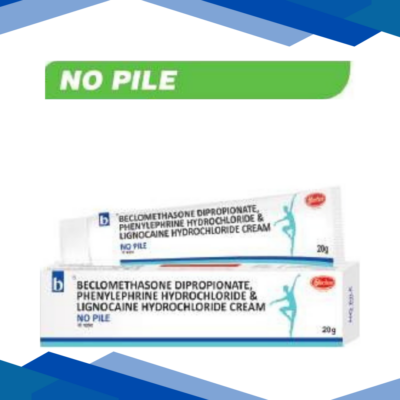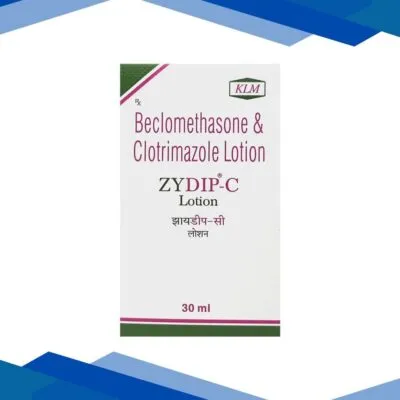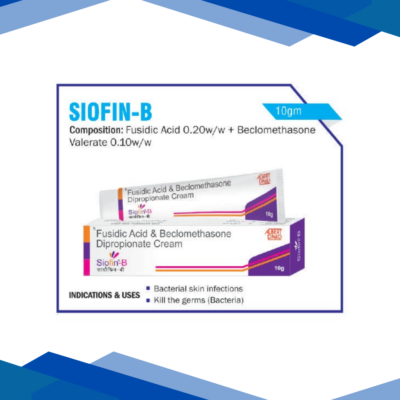

Mycoclin B Cream 15gm
No Prescription yet? Don’t worry! Click Here to Get Online Consultation
Beclometasone is a corticosteroid medication used to reduce inflammation and allergic reactions in the body. It is commonly prescribed in inhalers for the long-term management of asthma and other respiratory conditions, helping to prevent symptoms such as wheezing, shortness of breath, and chest tightness. Beclometasone is also available as nasal sprays, creams, and ointments to treat allergic rhinitis and various inflammatory skin disorders by suppressing the immune response and decreasing swelling, redness, and irritation.
Beclomethasone
Beclomethasone Dipropionate
Beclomethasone is a potent synthetic corticosteroid used in the management of inflammatory and allergic conditions. It works by suppressing the immune response and inhibiting pro-inflammatory mediators, thereby reducing swelling, mucus secretion, and airway irritation. It is often used alongside bronchodilators (β-agonists) or other corticosteroids for better control.
Available Formulations
Nebulizer Solutions/Spray: Acts as a preventer to reduce airway inflammation
Nasal Drops/Spray: Provides direct relief from nasal congestion
Topical Form: Used for skin inflammation and itching
Major Therapeutic Benefits
Localized Anti-inflammatory Action: Targets specific inflamed areas
Asthma Control: Reduces airway hyperreactivity to triggers
Non-Drowsy Allergy Relief: Suitable for daytime use without sedation
Skin Healing: Helps manage chronic dermatitis and itchy conditions
Directions to Use
Inhaler: Use regularly at the same time daily; rinse mouth after use to prevent oral thrush
Nasal Spray: Shake well, clear nasal passage, and spray with head slightly forward
Topical Use: Apply a thin layer; avoid covering unless prescribed
Safety and Side Effects
Inhalation: Hoarseness, throat irritation, or oral infections
Nasal: Dryness, nosebleeds, or unpleasant taste
Skin: Thinning, stretch marks, or burning sensation with prolonged use
Precautions & Warnings
Not for Immediate Relief: Not a rescue medication; use salbutamol for acute asthma attacks
Infections: May mask infection symptoms; inform doctor if infections are present
Withdrawal: Avoid sudden discontinuation
Vision Issues: Long-term use may increase risk of glaucoma or cataracts
Frequently Asked Questions (FAQs)
Q: Is it an anabolic steroid?
No, it is a corticosteroid used for inflammation, not muscle building
Q: How fast does nasal spray work?
Relief may start within 12–24 hours, full effect in 3–7 days
Q: Can it be used on the face?
Only under strict medical supervision
Q: What if I miss a dose?
Take it when remembered; do not double dose
Q: Is it safe for children?
Yes, but requires careful dose monitoring for long-term use
Sertaconazole
Sertaconazole Cream : Uses , side effects , price, and alternatives .
Sertaconazole is a rather potent , broad spectrum topical antifungal in the imidazole group. It is mainly used for specialized superficial fungal skin issues, especially interdigital tinea pedis (Athlete’s foot) , ringworm, and a few other persistent dermatomycoses. Most often it comes as a 2% w/w cream , and it works right where the fungus is, with little systemic uptake.
How Sertaconazole Works (Action mechanism)
Sertaconazole has a dual mechanism that hits fungal organisms at the cellular level.
Fungistatic action: it inhibits the fungal enzyme cytochrome P450 dependent 14α demethylase very aggressively. This blocks the change of lanosterol into ergosterol, a crucial building component for the fungal cell membrane.
Fungicidal action: without ergosterol, the membrane structure becomes weak. That loss of stability creates tiny leaks , nutrients slip out, and the fungus is effectively killed.
Key Medical Uses and benefits
Doctors typically recommend Sertaconazole for stubborn fungal patterns like these :
- Athlete’s foot (Tinea pedis): helps clear fungal clusters living in warm, damp toe web areas.
- Dhobie itch / Jock itch (Tinea cruris): reduces intense itching plus red , circular looking rashes in the groin region.
- Ringworm (Tinea corporis): treats scaly , contagious ring shaped lesions on arms, legs, or the torso.
- Pityriasis versicolor (Tinea versicolor): manages spotty, flaky skin discolorations from yeast overgrowth.
How to Apply (Dosage and method)
To get good outcomes and reduce fungal adaptation, follow a simple routine.
Preparation: rinse the infected site with a mild soap free cleanser. Pat fully dry with a clean towel. Any leftover dampness can help the fungus replicate.
Application: squeeze a suitable amount of cream and gently rub it onto the skin. Cover the visible edge of the infection , plus about one inch around it even if that nearby skin looks normal.
Frequency: usually twice daily (morning and night) for about 4 weeks, or exactly as your primary physician instructs.
Post care hygiene: wash your hands well with warm water and soap right after applying, unless your hands are actually the treated area.
Important advisory: unless your dermatologist told you otherwise, do not cover it with bandages , tight dressings, or airtight plastic wraps. Letting the skin breathe helps reduce excess moisture and avoid localized breakdown.
Possible side effects
Sertaconazole generally has a strong local safety profile. Still, mild surface reactions can happen early on.
Common application site reactions
- brief burning, stinging, or tingling
- mild dryness or small flaking
- slight tenderness or pinkness (erythema)
Rare reactions (stop use if this appears)
- severe contact dermatitis, blistering, oozing, intense swelling
- severe hives, skin peeling, or spreading rashes
Safety and personal lifestyle guidance
Parameter | Clinical status | Medical recommendation
Pregnancy ⚠️ Caution advised: Human evidence is limited. Use only if your doctor says it is necessary and benefits clearly outweigh possible fetal risk.
Breastfeeding ⚠️ Consult doctor: It is unclear whether the cream leaks into breast milk. Do not apply it directly on or near the breasts before nursing.
Age limit ❌ Under 12 years: Safety, tolerability, and effectiveness have not been clinically proven for children below 12.
Contagion risk 📢 High
Fungal spores spread easily. Avoid sharing personal items like bath towels, socks, shoes, and clothing with household members while recovery is in progress.
Frequently Asked Questions (FAQs)
Q1: Is Sertaconazole the same drug as Clotrimazole or Miconazole?
They are in the same general imidazole family, but Sertaconazole has a distinctive sulfur containing thiophene ring. That chemical tweak helps it bind more strongly to fungal cells, supporting better retention in the skin outer layer and lowering relapse speed.
Q2: Can I apply Sertaconazole on my face to handle acne breakouts?
No. It is an antifungal medicine, not a treatment for bacteria driven acne vulgaris or hormonal pimples. Misuse can disrupt the skin’s natural microbiome and cause local irritation.
Q3: My skin looks completely clear after 10 days. Can I stop?
No. Fungal spores are microscopic and tough. Even when scaling or itching improves quickly, tiny fungal fractions can remain. Stopping early can trigger a quicker, harder relapse. Finish the full 4 week course unless your doctor told you otherwise.
Q4: What should I do if I accidentally get this cream in my eyes?
This cream is meant for external skin only. If it goes into your eyes, nose, or mouth, rinse immediately with cold running water for several minutes. If burning or blurred vision keeps happening, get medical evaluation.
Q5: How can I speed healing for Athlete’s foot while using Sertaconazole?
Fungi prefer damp conditions. Wear breathable cotton socks, change out of sweaty footwear right after exercise, keep toenails trimmed short, and let shoes air out fully between wears.
At Gem Pharmacy, we make every effort to provide accurate, expert-written, and thoroughly reviewed information related to medicines. However, this information should not be considered a substitute for professional medical advice, diagnosis, or treatment from a qualified doctor.
The purpose of this information is to educate users and improve communication between patients and healthcare professionals. It should not be used to diagnose or treat any condition.
Always consult a certified healthcare professional before taking any medication.


Related products