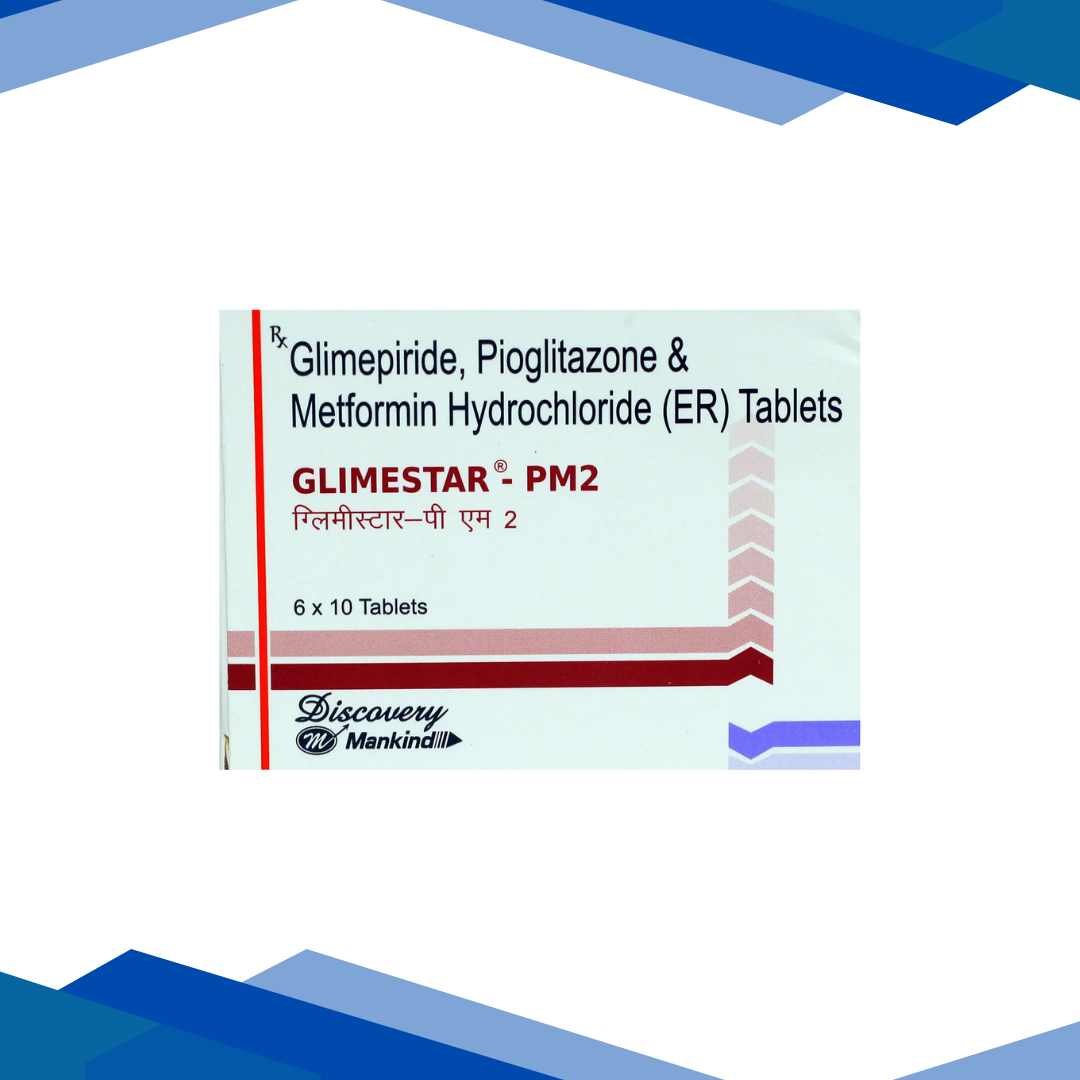
Glimestar-Pm2
No Prescription yet? Don’t worry! Click Here to Get Online Consultation
Glimestar-Pm2 tablet is used to manage type 2 diabetes by lowering high blood sugar levels. It helps the body respond better to insulin, allowing sugar to be used properly for energy. This medicine improves overall blood sugar control and reduces insulin resistance. It can be prescribed alone or along with other diabetes medicines like metformin. For more details kindly click on Medicine Salts below:
Glimepiride
Glimepiride Tablets (USP/IP)
Glimepiride is an oral anti-diabetic medication belonging to the second-generation sulfonylurea class. It is indicated for the management of Type 2 Diabetes Mellitus (T2DM) in adults. By stimulating insulin release and improving insulin sensitivity, it helps maintain stable blood glucose levels and reduces long-term risks like cardiovascular disease, kidney damage, and nerve complications.
Key Benefits
Superior Glycemic Control: Effectively lowers fasting and postprandial blood glucose levels.
Once-Daily Dosing: Provides 24-hour coverage with a single dose.
Organ Protection: Helps prevent diabetic retinopathy and nephropathy.
Potency: Highly effective even at low milligram doses.
How It Works
Glimepiride acts as an insulin secretagogue. It stimulates pancreatic beta cells to release insulin and enhances glucose uptake in peripheral tissues like muscles, reducing circulating sugar levels.
Usage Instructions
Timing: Usually taken once daily with breakfast or the first main meal.
Method: Swallow whole with water—do not crush or chew.
Consistency: Take at the same time daily.
Meal Requirement: Do not skip meals after taking the medicine to avoid hypoglycemia.
Side Effects
Common side effects may include:
Hypoglycemia (low blood sugar) – dizziness, sweating, shakiness
Gastrointestinal discomfort – nausea, diarrhea
Blurred vision (temporary)
Weight gain
Precautions & Warnings
Alcohol: Avoid as it may cause unpredictable blood sugar changes and increase risk of hypoglycemia.
Kidney & Liver Health: Dose adjustment may be required in renal or hepatic impairment.
G6PD Deficiency: Risk of hemolytic anemia.
Sun Sensitivity: May increase photosensitivity—use sunscreen.
Driving: Avoid driving until you know how the drug affects you.
Frequently Asked Questions (FAQs)
Q: Can it be used in Type 1 Diabetes?
No. It is only effective in Type 2 Diabetes.
Q: What to do in case of low blood sugar?
Take fast-acting sugar like glucose tablets or juice immediately and contact your doctor.
Q: How fast does it work?
Starts lowering sugar within 2–3 hours, but full control may take a few weeks.
Q: Is it safer than Metformin?
Metformin is usually first-line, but Glimepiride is an effective alternative when needed.
Q: Can I stop it once sugar is normal?
No. Diabetes requires continuous management. Stopping suddenly may worsen control.
Storage
Store at room temperature (20°C to 25°C) in a dry place, away from light and moisture. Keep out of reach of children.
Disclaimer
This information is for educational purposes only. Always consult a qualified healthcare professional before starting or modifying treatment.
Pioglitazone & Metformin Hydrochloride
Pioglitazone & Metformin Hydrochloride Tablets
This combination drug may be used to treat Type 2 Diabetes Mellitus by combining Pioglitazone and Metformin Hydrochloride. When lifestyle modifications like diet and exercise, or treatment with a single medication, are not enough to maintain optimal glycemic control, this combination attacks different facets of blood sugar maintenance, providing a shield against daily glucose fluctuations.
The Ingredients
The traditional actives under one cover actually have reciprocal synergistic effects that complement each other while aiming at different targets for comprehensive metabolic control:
Pioglitazone: An insulin sensitizer from the thiazolidinedione (TZD) class, pioglitazone works by improving insulin sensitivity. Pioglitazone activates specific receptors, PPAR-γ, in adipose tissue, muscle cells, and the liver, which increase insulin sensitivity. This will help in the transfer of glucose from the bloodstream to the cells for further utilization in the heart.
Metformin Hydrochloride: The biguanide action of Metformin results in decreasing the glucose coming into your blood. It reduces the liver's production of glucose, reduces the gastrointestinal absorption of sugar from food, and works with Pioglitazone to increase the peripheral sensitivity to insulin even more.
Major Benefits
Complementary Blood Sugar Management: Insulin resistance and glucose overproduction are both conditions that need to be resolved so both fasting blood glucose and post-lunch levels can be maintained in harmony.
Fine-Tuned Insulin Sensitivity: It kind of converts your body to making more efficient use of what natural insulin it makes into a sustainable, long-term diabetes treatment modality.
HbA1c All-Rounder: Sufficiently proven to help patients reach and maintain the HbA1c goal with good nutrition and regular physical activity.
Vascular Support: Keeping good control over the levels of blood glucose massively reduces the risk of developing long-term diabetes-related microvascular complications affecting the eyes, kidneys, and nerves.
Intake and Administration Specification
With Meal: To avoid any potential upset stomach, nausea, or digestive upset, always take a tablet with a main meal (e.g., breakfast or dinner).
Swallow the Tablet Feast: Do not crush, chew, or break the tablet, and afterward, consider swallowing it whole with a full glass of water to ensure the proper release of the active ingredients in your system.
This is important for getting a good result and will help keep the medication in your body correctly around the clock.
It is recommended that one keeps a record of his blood sugar levels, as directed by your counselor, to know how effectively the mediation is affecting him.
Frequently Asked Questions (FAQs)
1. What sets this medicine combo from Metformin alone?
Metformin has a very good mechanism at work when it comes to reducing the production of sugar by the liver and basic insulin sensitivity. Insulin in people shows considerable resistance predominantly in the muscles and tissues. The action of Pioglitazone is to directly deal with this resistance at the cellular level and opens it up to allow the ready entry of glucose. When Pioglitazone is combined with Metformin, this health-making pair puts into effect a powerful solution that may not have been achieved by each drug if used alone.
2. Could the drugs bring down my blood sugar levels too much?
On its own, the combined drug carries very scant chance of providing hypoglycemia-like results, as neither of their constituent drugs separately activates the pancreas to pump the secretion of further insulin. However, if it is prescribed with sulphonylureas or insulin, the risk of hypoglycaemia increases. Keep a stock of glucose tablets or fruit juice nearby, just to be safe.
3. What should I do if I notice sudden weight gain or swelling?
It may so happen that pioglitazone causes fluid retention in your body, leading to mild swelling also called edema in your ankles or feet. There may also be mild weight gain. If you notice a sudden increase in weight, severe swelling, or shortness of breath, you must get in touch with your health professional immediately, as these could signal fluid overload or strain on the heart.
4. Do I need to abstain from consuming alcohol while I am taking this medication?
Alcohol must be greatly restricted, if not strictly avoided, while you are taking any Metformin-containing medication. Alcohol significantly raises the risk of lactic acidosis, a rare but serious metabolic condition where lactic acid accumulates in the blood. It may also cause erratic fluctuations in blood glucose levels.
5. How much time do I need to wait in order to see the fully blossoming effect of the medicine?
Metformin builds up very quickly; however, Pioglitazone accumulates its effect gradually as it modifies cellular responses to insulin. You may start seeing improvements in your daily blood sugar logs as early as 1 to 2 weeks; however, optimum therapeutic effect is generally expected within 4 to 12 weeks of continuous use.
At Gem Pharmacy, we make every effort to provide accurate, expert-written, and thoroughly reviewed information related to medicines. However, this information should not be considered a substitute for professional medical advice, diagnosis, or treatment from a qualified doctor.
The purpose of this information is to educate users and improve communication between patients and healthcare professionals. It should not be used to diagnose or treat any condition.
Always consult a certified healthcare professional before taking any medication.


Related products