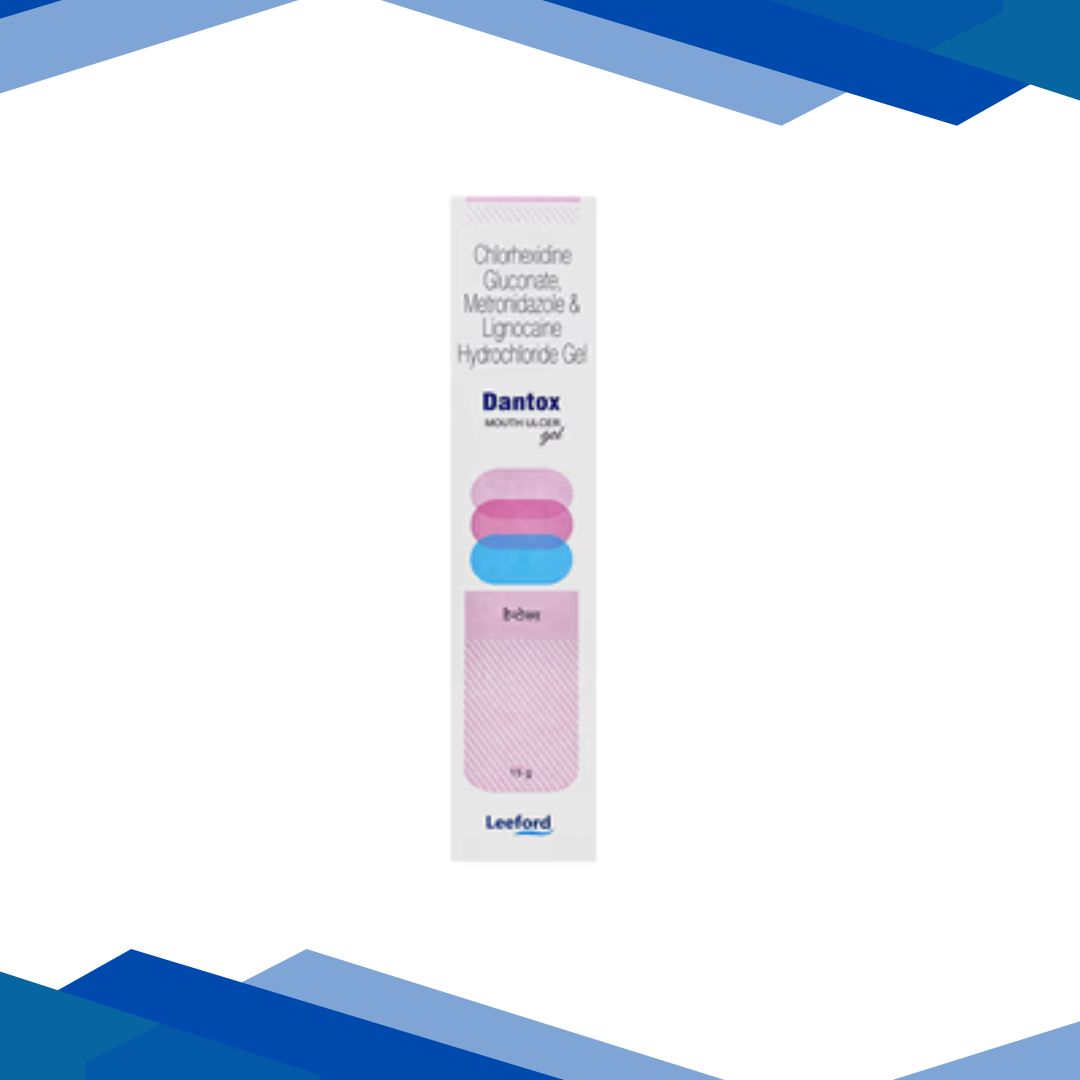
DANTOX MOUTH ULCER Gel 15g
No Prescription yet? Don’t worry! Click Here to Get Online Consultation
DANTOX Mouth Ulcer Gel combines an antiseptic (chlorhexidine), an antibiotic/anaerobic agent (metronidazole) and a local anaesthetic (lignocaine) for topical treatment of mouth ulcers. The formulation is designed to reduce infection, inflammation and pain in ulcerated areas of the oral mucosa. For more details kindly click on Medicine Salts below:
Chlorhexidine Gluconate
Chlorhexidine Gluconate 0.2% w/v Oral Rinse
Chlorhexidine Gluconate 0.2% w/v is a very strong, broad-spectrum antiseptic and anti-plaque oral liquid. It is usually prescribed (or strongly recommended) to help with gingivitis, like swollen or bleeding gums, and to keep dental plaque from building up too fast. It also helps painful mouth ulcers calm down quicker, and it supports oral cleanliness when brushing is limited because of injury or after surgical recovery.
Therapeutic Class: Antiseptics / Anti-infectives
Active Concentration: Chlorhexidine Gluconate IP 0.2% w/v
Form: Liquid
Liquid Oral Rinse / Mouthwash
Prescription Status: Over-The-Counter (OTC) / often recommended directly by dental surgeons
Primary Uses & Clinical Benefits
1. Gingivitis & Gum Inflammation Control
Chlorhexidine Gluconate works to reduce the harmful microbe communities that drive red, puffy, bleeding gums. When used regularly, it can help reverse early gum issues and support healthier tissue structure.
2. Anti-plaque Defense (when brushing is hard)
When tooth brushing hurts or is restricted clinically (like after wisdom tooth extraction or periodontal procedures), this rinse can act like a chemical guard. It sticks to oral surfaces and helps stop the formation of tacky bacterial plaque films.
3. Quicker Mouth Ulcer Recovery
The solution cleans aphthous ulcers (canker sores) and helps with localized oral infections by reducing the chance of secondary bacterial invasion. This supports the natural mucosal tissue repair process.
Mechanism of Action: How It Works
Chlorhexidine Gluconate is a cationic (positively charged) molecule. It binds tightly to negatively charged cell walls of bacteria, fungi, and certain viruses found in the mouth. This disrupts the cell membrane, so key cellular contents leak out, and the pathogens are effectively killed.
One key aspect is its substantivity—it adheres to enamel, gums, and oral tissues and then releases antibacterial activity gradually for up to about 12 hours, providing longer lasting protection.
Directions for Use & Daily Protocol
To get the full effect and reduce the chance of neutralizing the active ingredient, follow this order carefully:
1. Brush and Floss First:
Prerequisite Step.
Brush and floss thoroughly. Rinse your mouth to remove every bit of toothpaste residue with plain water completely, before you open the medication.
2. Measure the Exact Dose:
10 ml to 15 ml.
Pour exactly 10 ml to 15 ml (roughly one tablespoon) of the undiluted Chlorhexidine Gluconate liquid into the measuring cap provided. Do not dilute it with water and do not mix it.
3. Swish and Hold:
60 seconds.
Place the solution in your mouth and swish firmly around teeth and gums for a full 60 seconds. Do not gargle it in the throat, and do not swallow the liquid.
4. Spit Out and Wait:
30-minute hold.
Spit the liquid out fully. Important: do not rinse your mouth with water, do not brush your teeth, and do not eat, drink, or smoke for at least 30 minutes after using it.
Side Effects & Adverse Actions
Chlorhexidine Gluconate is effective, but longer or improper use can lead to certain localized side effects. Keep an eye on them.
Common Oral Side Effects
- Surface staining: temporary brown or yellowish staining on the teeth, tongue surface, dental restorations, or dentures
- Taste alteration: a brief bitter taste, or a short change in how food and drinks taste right after use
- Increased tartar: more calculus buildup, meaning hardened plaque deposits, especially with extended timelines
Serious Symptoms (Stop use and seek medical help right away)
- Sudden swelling of the salivary glands, like the parotid glands, under the jaw or near the ears
- Severe allergic reactions, including skin rash, swelling of face, lips, tongue, or throat, with immediate breathing trouble
- Painful peeling or raw irritation inside cheeks and on the oral mucosa
Safety Profiles & Critical Warnings
Patient Category | Clinical Status | Medical Directives & Rationale
Pregnancy: Safe
Generally considered safe when your dentist explicitly approves it. Systemic absorption through oral tissues is minimal.
Breastfeeding: Safe
Compatible with lactation because it does not enter breast milk in clinically meaningful amounts that would impact a nursing infant.
Pediatric Use
⚠️ High Caution
Not recommended for children below 6 years unless a pediatric dentist directs it, due to the higher chance of accidental swallowing.
Tooth Fillings
⚠️ Notice
May cause permanent discoloration on front-tooth composite or synthetic restorations if their surfaces are rough or already degraded.
Frequently Asked Questions (FAQs)
Q. Why can’t I rinse my mouth with water immediately after using Chlorhexidine?
Because rinsing with water removes the medicine before it can properly latch to your teeth and gums, and that reduces the effectiveness dramatically. Also, rinsing right after use can make the bitter aftertaste worse.
Q. Why does toothpaste mess with Chlorhexidine Gluconate oral rinse?
Many toothpastes include Sodium Lauryl Sulfate (SLS), which is a foaming agent. SLS is negatively charged and it chemically binds to the positively charged Chlorhexidine molecule, neutralizing its germ-killing activity. Always rinse well with water to clear all toothpaste traces before using the oral rinse, or schedule the mouthwash for a completely different time of day.
Q. How can I reduce the brown stains from this mouthwash?
Those brown surface stains are not permanent structural damage. They show up because the medicine binds to dietary tannins found in foods. You can reduce staining by brushing and flossing daily, and avoiding dark beverages like tea, coffee, or red wine for at least an hour after use. If any stain remains after your treatment period ends, a dental professional can remove it with routine scaling and polishing.
Q. Can I use Chlorhexidine Gluconate as a daily cosmetic rinse for bad breath?
No. It should not replace a regular daily mouthwash. Because it is a strong antimicrobial, constant use beyond about 2 to 4 weeks may disturb the natural balance of your oral microbiome, increase tartar build-up, and change taste perception. Use it only for the short-term duration your dentist recommends.
Lignocaine
Lidocaine oral solution / oral gel
Lidocaine oral solution / oral gel are considered as having a topical action in terms of the nerve passage blockage with following analgesia. Lidocaine, also known as lignocaine, was given in a milder concentration for the relief of anesthetic discomfort in minor dentistry-related forasts and wound treating medicines of home-care nature. Or alternatively the embedded, painful or hurtful lesions with wax-like medicines. Topically administrated medicines fail to be throngs of candidates except for skin itching, sunburn pain, burning, stings live up to article bites. Lidocaine is of greater value to stay on the shelves for some time.
Appropriate Uses
Local Anesthesia: Quick onset as the skin or mucous membrane goes in numbness and fades with application, thus amplifying the good.
Surface Analgesia: Helps relieve pain, albeit the temporary pain associated with minor burns, sunburn bites, or cracks of the skin.
Dental Aid: Used frequently on oral gels for oral ulcers or teething pain and oral soreness under close medical observation.
Post-Operative Relief: Help relieve discomfort during the healing phases of localized superficial wounds.
Proctology Relief: Generally used as an effective agent in ointments for symptoms of hemorrhoids (piles) and anal fissures.
Characteristics
Rapid Onset: Localized relief of symptoms takes place within about 2-5 minutes after application.
Pinned Down Action: Anesthetizing an area ensures no effect on the rest of the body.
Formulations of Different Kinds: It comes in various formulations such as gels, sprays, ointments, and patches to meet different clinical needs.
How to Take
Prepare the Area: Thoroughly clean and dry the area to be treated.
Application: Gently rub a thin layer of the ointment or spray onto the affected area, as per the advice of the medical professionals.
Take the Principle of Dosage: Follow the instructions regarding the quantity strictly. Using excessive amounts on a wide area of the skin may permit systemic absorption of the drug.
Wash Your Hands! Just in case: Remember to wash your hands after applying unless the hands are the area being treated.
Never ignore any potential side effect or bogus safety of using this product.
Lignocaine is usually safe when used in accordance with the instructions, yet it might cause issues in some persons:
- Temporary redness or swelling in the area it is applied to.
- A little bit of burning or stinging.
- The appearance of paleness or local itching.
When an application of lignocaine causes dizziness, blurred vision, or a severe fall in working heart rate, an urgent medical consultation is in order; this is a warning sign of systemic toxicity.
Cautions
If you have a history of hypersensitivity to amide-type local anesthetics, then it is not safe to use Lignocaine.
These applications are prohibited by the manufacturer: Wounds: these are deep wounds. Damaged skin: injuries and sores significantly damaged by infections and blisters.
DO NOT let it touch your eyes and inside the ears. If it does come into contact, rime with water.
Consult your doctor about its use during pregnancy. Lignocaine should be used in pregnancy only if it is absolutely necessary.
Frequently Asked Questions (FAQs)
Q: How long will Lignocaine numb me?
The numbing effects usually last between 30 to 60 minutes, although the durations may vary according to the concentrations of the product and the location in which they are used.
Q: Can I use Lignocaine to act on a toothache?
Lignocaine might be incorporated in some oral gels. However, it is important to ensure that the product is designed for use in dentistry. Do not apply any over-the-counter skin creams or sprays into the mouth.
Q: Can one apply Lignocaine before tattooing?
Sometimes, vibratablum was used to perform pain-reducing procedures on tattoos but excessively applied, discoloring skin hue and killing healing tissue. It is important to discuss this with a professional who is providing your treatment.
Q: What should I do if I swallow some of the gel accidentally?
If the gel is only used in a small amount, little or no harm will be done; however, in those cases where a large amount of skin cream has been swallowed, calling the poison control center or the emergency room is advisable.
Make sure you do not cover the area with an occlusive dressing, a kind of membrane that is airtight, unless your doctor specifically tells you to, in order to increase the absorption of the medicine through the skin.
Metronidazole
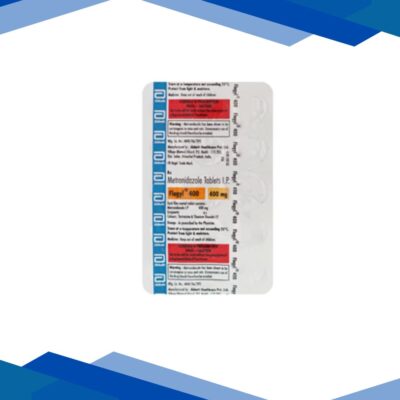
Metronidazole 400 mg Tablet
Metronidazole is an antibiotic widely marketed under the brand name Flagyl. It is a powerful antiprotozoal agent used to treat infections caused by anaerobic bacteria and parasites such as amoebiasis and giardiasis. It works by entering the DNA of microorganisms, preventing replication and thereby eliminating the infection.
Therapeutic Uses
Bacterial Infections: Used for abdominal, liver, skin, joint, and respiratory tract infections caused by anaerobic bacteria.
GI-Related Disorders: Effective in H. pylori infection and amoebiasis.
Dental Abscess: Used to treat oral bacterial infections, including dental caries-related infections and gingivitis.
Specific Infections: Indicated for bacterial vaginosis and trichomoniasis.
Proper Use
Complete Full Course: Always finish the entire prescribed course even if symptoms improve early. Incomplete use may lead to infection recurrence or antibiotic resistance.
Swallow Whole: Do not crush or chew the tablet.
With Food: Take with a meal, water, or milk to reduce stomach irritation.
Missed Dose: Take as soon as remembered. If it is close to the next dose, skip the missed dose. Do not double dose.
Important Safety Measures
Alcohol Warning: Avoid alcohol completely during treatment and for 48–72 hours after the last dose. It may cause a disulfiram-like reaction including nausea, vomiting, abdominal cramps, headache, and flushing.
Pregnancy & Breastfeeding: Inform your doctor if you are pregnant, especially in the first trimester.
Nerve Health: Long-term use may cause neurological symptoms such as tingling or numbness in limbs. Report any such signs immediately.
Liver Function: Dose adjustment may be required in liver impairment.
Potential Side Effects
Most are mild and temporary:
Metallic taste in mouth
Nausea or abdominal cramps
Loss of appetite
Headache
⚠️ Rare but serious effects may include pancreatic irritation or peptic ulcer complications.
Frequently Asked Questions (FAQs)
Q: Why does my mouth taste like metal?
A: A metallic taste is a common and temporary side effect. It usually resolves within 1–7 days after stopping treatment. Chewing sugar-free gum or mint may help.
Q: Can Metronidazole be used for common cold or flu?
A: No. It is effective only against bacterial and protozoal infections, not viral infections like cold, flu, or COVID-19.
Q: How soon will I feel better?
A: Improvement often occurs within 24–48 hours, but the full course must be completed to ensure complete eradication of infection.
Q: Is it safe to drive while taking this medicine?
A: Generally yes, but avoid driving if you experience dizziness or confusion.
Q: Can I take it with other medications?
A: Metronidazole may interact with warfarin and lithium. Always inform your doctor about all medications and supplements.
At Gem Pharmacy, we make every effort to provide accurate, expert-written, and thoroughly reviewed information related to medicines. However, this information should not be considered a substitute for professional medical advice, diagnosis, or treatment from a qualified doctor.
The purpose of this information is to educate users and improve communication between patients and healthcare professionals. It should not be used to diagnose or treat any condition.
Always consult a certified healthcare professional before taking any medication.


Related products