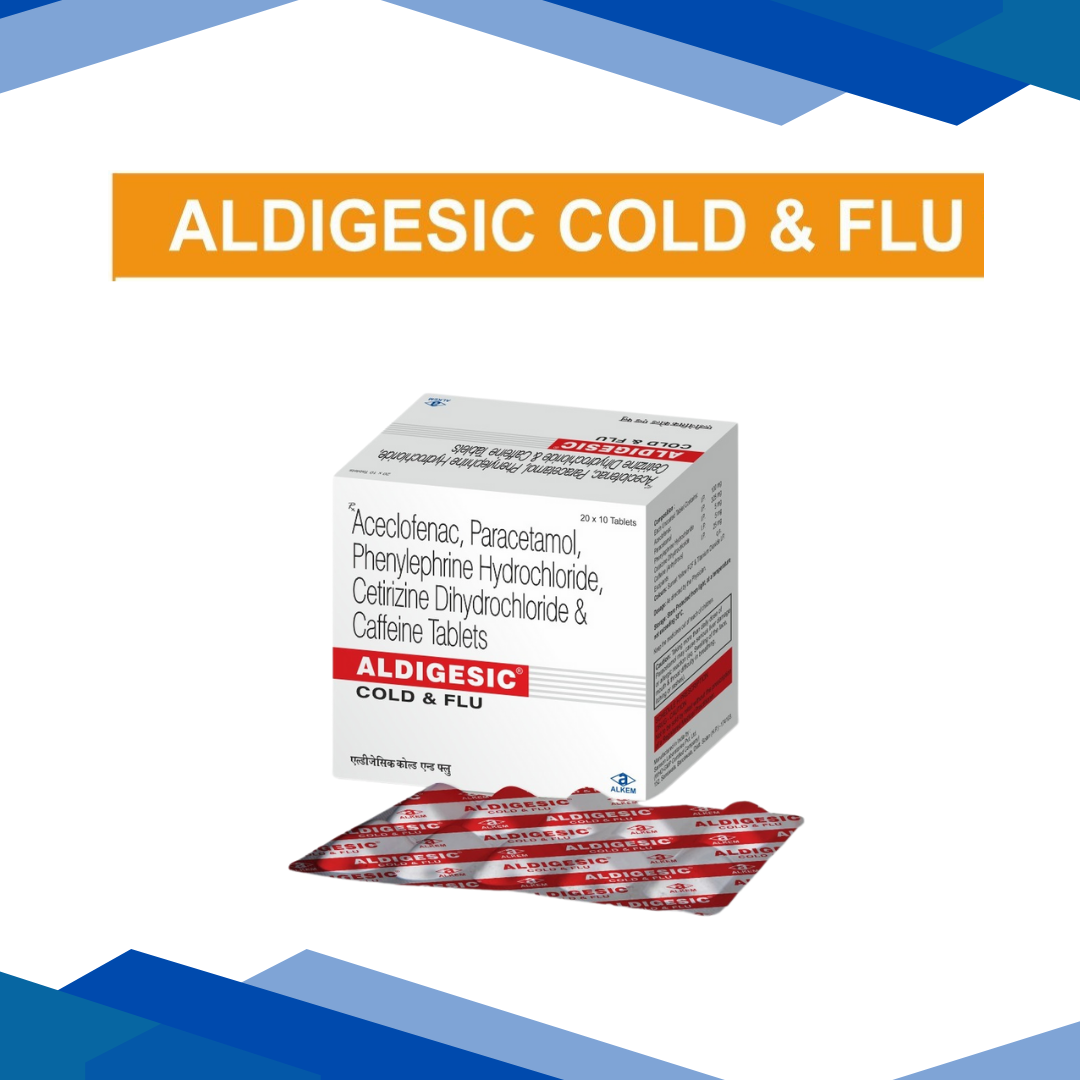
Aldigesic Cold & Flu
No Prescription yet? Don’t worry! Click Here to Get Online Consultation
Aldigesic Cold & is a combination medicine commonly used to provide relief from symptoms associated with the common cold, flu, allergies, and upper respiratory tract infections. It works through multiple mechanisms: Aceclofenac and Paracetamol help reduce pain, fever, and inflammation, Caffeine enhances the effectiveness of pain relief, Cetirizine helps control allergy symptoms such as sneezing, runny nose, and watery eyes, while Phenylephrine HCl acts as a decongestant to relieve nasal blockage and sinus pressure. Together, these ingredients help improve comfort and daily functioning during illness. This medicine is generally used under medical guidance to ensure safe and appropriate treatment based on individual health needs.
Description
Aldigesic Cold & is a combination medicine commonly used for the symptomatic management of conditions associated with pain, fever, inflammation, allergic symptoms, nasal congestion, and common cold-related discomfort. this multi-ingredient formulation combines the benefits of an anti-inflammatory agent, a pain reliever, an antihistamine, a nasal decongestant, and a mild central nervous system stimulant to provide comprehensive relief from multiple symptoms occurring simultaneously.
the medicine works through different mechanisms of action contributed by each ingredient. aceclofenac helps reduce inflammation, swelling, and pain by inhibiting the production of certain chemical mediators known as prostaglandins. paracetamol helps lower fever and relieve mild to moderate pain by acting on the temperature-regulating center in the brain and reducing pain perception. cetirizine is an antihistamine that helps control allergy symptoms such as sneezing, runny nose, watery eyes, and itching by blocking the action of histamine, a substance released during allergic reactions.
phenylephrine hcl acts as a nasal decongestant by narrowing swollen blood vessels in the nasal passages, helping relieve nasal blockage and sinus congestion. caffeine serves as an adjuvant ingredient that may enhance the effectiveness of pain-relieving medications while helping reduce fatigue, drowsiness, and lethargy that often accompany viral illnesses and allergic conditions.
this combination is often recommended for individuals experiencing symptoms associated with common cold, flu-like illnesses, allergic rhinitis, sinus discomfort, headache, body aches, fever, and upper respiratory tract infections. by addressing multiple symptoms simultaneously, it may improve overall comfort and help individuals maintain their daily activities while recovering. however, it should be used responsibly and under the guidance of a healthcare professional, especially in patients with underlying medical conditions or those taking other medications.
ingredients
- aceclofenac: aceclofenac is a non-steroidal anti-inflammatory drug (nsaid) that helps reduce pain, inflammation, redness, swelling, and stiffness. it is particularly useful for relieving headaches, body aches, muscle pain, throat pain, sinus pain, and discomfort associated with inflammatory conditions. it works by blocking cyclooxygenase enzymes involved in prostaglandin synthesis.
- caffeine: caffeine is a mild stimulant that helps combat tiredness and fatigue. in combination products, it may improve the effectiveness of pain-relieving medicines and enhance alertness. it can help reduce the feeling of weakness commonly experienced during cold, flu, and febrile illnesses.
- cetirizine: cetirizine is a second-generation antihistamine that helps relieve symptoms caused by allergies and histamine release. it is effective in reducing sneezing, nasal discharge, itchy nose, watery eyes, and throat irritation. compared with older antihistamines, it generally causes less drowsiness, although some individuals may still experience sleepiness.
- paracetamol: paracetamol is a widely used analgesic and antipyretic medicine. it helps lower elevated body temperature and relieves mild to moderate pain such as headaches, sore throat pain, body aches, joint pain, and discomfort associated with viral infections.
- phenylephrine hcl: phenylephrine hydrochloride is a nasal decongestant that helps reduce swelling in nasal passages. it improves airflow through the nose and provides relief from blocked nose, sinus pressure, and congestion commonly associated with cold, flu, and allergic rhinitis.
key uses
- relief of common cold symptoms including fever, body aches, headache, nasal congestion, sneezing, and runny nose.
- management of seasonal and perennial allergic rhinitis characterized by itching, watery eyes, nasal irritation, and sneezing.
- reduction of fever associated with viral infections, respiratory tract infections, and inflammatory conditions.
- relief of sinus congestion and sinus pressure caused by upper respiratory tract infections and allergies.
- management of headache, including headache associated with sinus congestion and common cold.
- relief from throat discomfort and pain that may occur during viral illnesses and upper respiratory infections.
- reduction of muscle pain, body aches, and generalized discomfort associated with influenza-like illnesses.
- symptomatic treatment of nasal blockage that interferes with breathing and sleeping.
- relief of watery eyes, itchy throat, itchy nose, and other allergy-related symptoms.
- supportive management of flu-like conditions where multiple symptoms occur simultaneously.
- improvement of comfort and daily functioning during episodes of respiratory infections and allergic flare-ups.
how to use
Aldigesic Cold & should be used exactly as advised by a healthcare professional or according to the instructions provided on the product label. it is generally taken orally with a sufficient amount of water. taking the medicine after food may help reduce stomach discomfort associated with the nsaid component. the tablet should be swallowed whole without crushing or chewing unless specifically instructed otherwise.
patients should avoid taking more than the recommended amount, particularly because excessive intake of paracetamol can result in serious liver damage. it is also important to check other medications being taken concurrently, as many cold and flu products contain similar ingredients that may increase the risk of accidental overdose. if symptoms persist, worsen, or recur frequently despite treatment, medical evaluation is recommended to determine the underlying cause.
adequate hydration, rest, proper nutrition, and adherence to general supportive measures may enhance recovery. this medicine is intended for symptomatic relief and may not treat the underlying infection if one is present.
safety information
- warnings: this medicine should be used with caution in patients with liver disease, kidney disease, hypertension, heart disease, stomach ulcers, bleeding disorders, thyroid disorders, glaucoma, enlarged prostate, or diabetes. patients with a history of allergic reactions to nsaids, antihistamines, or any component of the formulation should avoid its use unless specifically advised by a healthcare professional.
- side effects: common side effects may include nausea, stomach discomfort, indigestion, dizziness, mild drowsiness, dry mouth, nervousness, headache, restlessness, increased heart rate, and difficulty sleeping. some individuals may experience mild gastrointestinal irritation due to aceclofenac. serious but uncommon side effects may include severe allergic reactions, skin rash, swelling of the face or throat, gastrointestinal bleeding, liver dysfunction, kidney problems, irregular heartbeat, severe hypertension, and breathing difficulties. immediate medical attention is required if serious symptoms develop.
- precautions: avoid driving, operating machinery, or performing activities requiring mental alertness if drowsiness, dizziness, or reduced concentration occurs. elderly patients may be more susceptible to adverse effects and should use the medicine carefully. long-term or excessive use should be avoided unless medically supervised.
- pregnancy/breastfeeding: pregnant women should use this medicine only when clearly recommended by a healthcare professional after assessing potential benefits and risks. certain components, particularly aceclofenac and phenylephrine hcl, may not be suitable during specific stages of pregnancy. breastfeeding mothers should seek medical advice before use, as some ingredients may pass into breast milk.
- interactions: this medicine may interact with anticoagulants, blood pressure medications, antidepressants, sedatives, antihistamines, corticosteroids, antidiabetic drugs, alcohol, and other pain-relieving medications. combining it with other products containing paracetamol may increase the risk of liver toxicity. concurrent use with alcohol may increase the likelihood of liver damage and stomach irritation.
- alcohol consumption: alcohol should generally be avoided while taking this medicine because it may increase dizziness, drowsiness, stomach irritation, and the risk of liver-related complications.
- kidney and liver function: patients with impaired kidney or liver function should consult a healthcare professional before using this medicine, as dose adjustments or alternative treatments may be required.
- cardiovascular considerations: phenylephrine hcl may increase blood pressure and heart rate in susceptible individuals. patients with cardiovascular disorders should seek medical advice before use.
additional information
- storage: store in a cool, dry place away from direct sunlight, heat, and moisture. keep the medicine in its original packaging and out of the reach of children and pets.
- missed dose: if a dose is missed, take it as soon as remembered unless it is nearly time for the next scheduled dose. do not take a double dose to compensate for a missed dose.
- overdose: overdose may lead to severe complications including liver damage, kidney impairment, stomach bleeding, high blood pressure, rapid heartbeat, excessive drowsiness, agitation, seizures, or serious allergic reactions. seek immediate emergency medical attention if overdose is suspected.
- habit forming: no. Aldigesic Cold & is generally not considered habit-forming when used as directed. however, excessive use of caffeine-containing products should be avoided.
- duration of use: this medicine is usually intended for short-term symptomatic relief. prolonged use without medical supervision is not recommended.
- monitoring: patients requiring extended treatment may need periodic monitoring of liver function, kidney function, and overall health status as advised by their healthcare provider.
frequently asked questions
Q: what is Aldigesic Cold & used for?
A: it is commonly used for the symptomatic relief of fever, headache, body aches, nasal congestion, runny nose, sneezing, sinus discomfort, and allergy-related symptoms associated with common cold and flu-like illnesses.
Q: can this medicine help with nasal blockage?
A: yes. phenylephrine hcl helps reduce swelling in nasal passages, improving airflow and relieving nasal congestion and sinus pressure.
Q: does this medicine cause drowsiness?
A: some people may experience mild drowsiness due to cetirizine. the effect varies among individuals, and caution should be exercised until the body's response is known.
Q: can i take this medicine for allergies?
A: yes. cetirizine helps relieve allergic symptoms such as sneezing, runny nose, watery eyes, and itching associated with allergic rhinitis.
Q: can i use this medicine for headache and fever?
A: yes. paracetamol and aceclofenac work together to relieve pain and reduce fever, making the medicine useful for headache and body aches.
Q: can i consume alcohol while taking this medicine?
A: alcohol should generally be avoided because it may increase the risk of liver damage, stomach irritation, dizziness, and drowsiness.
Q: is this medicine suitable for children?
A: use in children should only occur under the supervision and recommendation of a qualified healthcare professional, as age-specific considerations apply.
Q: can patients with high blood pressure take this medicine?
A: patients with hypertension should consult their healthcare provider before use because phenylephrine hcl may increase blood pressure in some individuals.
Q: can i take this medicine with other cold and flu medications?
A: care should be taken because many cold and flu products contain similar ingredients, especially paracetamol. combining products may increase the risk of overdose.
Q: what should i do if symptoms do not improve?
A: if symptoms persist, worsen, or last longer than expected, consult a healthcare professional for further evaluation and appropriate treatment.
Q: can this medicine be taken on an empty stomach?
A: taking it after food may help reduce stomach discomfort, especially because aceclofenac may irritate the stomach in some individuals.
Q: is this medicine an antibiotic?
A: no. this medicine provides symptomatic relief but does not treat bacterial infections. antibiotics should only be used when prescribed by a healthcare professional.
Q: can i drive after taking this medicine?
A: if you experience dizziness, drowsiness, or reduced alertness after taking the medicine, avoid driving or operating machinery.
Q: is long-term use safe?
A: long-term use should only occur under medical supervision because prolonged exposure to certain ingredients may increase the risk of adverse effects.
Q: can elderly patients use this medicine?
A: yes, but elderly individuals may be more sensitive to side effects and should use the medicine under medical guidance.
this information is for educational purposes only and should not be considered medical advice. always consult a qualified healthcare professional before use.
“`
At Gem Pharmacy, we make every effort to provide accurate, expert-written, and thoroughly reviewed information related to medicines. However, this information should not be considered a substitute for professional medical advice, diagnosis, or treatment from a qualified doctor.
The purpose of this information is to educate users and improve communication between patients and healthcare professionals. It should not be used to diagnose or treat any condition.
Always consult a certified healthcare professional before taking any medication.


Related products