
Showing the single result
Filter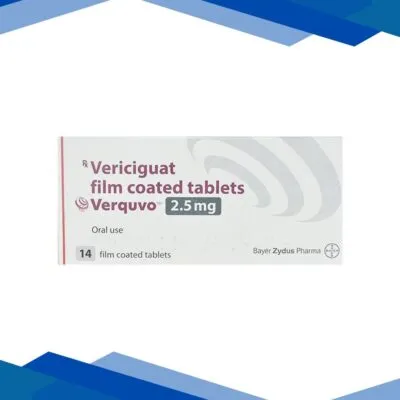
VERQUVO 2.5 Tablet 14’s
Vericiguat Tablets: View Uses, Side Effects, Price, and Mode of Action
Vericiguat is a prescription-only cardiovascular medication, a soluble guanylate cyclase (sGC) stimulator that works in a pretty direct way. It is used to lower the risk of cardiovascular death and emergency heart failure hospitalizations in adults who have symptomatic chronic Heart Failure with Reduced Ejection Fraction (HFrEF), mainly people who have recently had a worsening heart failure episode. That episode may have needed hospitalization, or it may have required outpatient intravenous (IV) diuretic therapy.
Action Mechanism: How Vericiguat Works
Long-term heart failure is often tied to endothelial dysfunction, meaning the body has trouble producing nitric oxide (NO). When nitric oxide is low, soluble guanylate cyclase (sGC) becomes less active, and this can reduce cyclic guanosine monophosphate (cGMP). That drop contributes to myocardial stiffness, vascular constriction, and continued tissue remodeling.
Vericiguat works on this pathway with a two-part effect, in a way that feels both specific and layered:
- Direct enzyme stimulation: It attaches straight to the sGC enzyme, at a specialized structural subunit, then it helps drive intracellular cGMP production even if internal nitric oxide availability is not ideal.
- Nitric oxide sensitization: At the same time, it changes the structural setup of sGC so it has a stronger grip on whatever endogenous nitric oxide is still present, essentially helping amplify the body’s own signaling.
The increased cellular cGMP then promotes downstream protein kinase activation. Practically, that leads to broader systemic vasodilation, lower cardiac preload and afterload, and a lessening of harmful ventricular remodeling over time.
Primary Uses & Clinical Benefits
Post-decompensation stabilization: helps protect higher risk patients soon after recent stabilization, when relapse risk is elevated.
Fewer re-hospitalizations: clinical findings suggest fewer urgent ER visits and repeat admissions related to fluid management issues.
Add-on to standard regimens: it is designed to fit alongside common therapies such as beta-blockers, ACE inhibitors, or ARNI options, rather than replacing them.
Guide to Dosage and Administration
Baseline titration: Vericiguat dosing is not static. Patients typically start at 2.5 mg by mouth once each day. With close medical oversight, the dose is often increased stepwise, commonly doubling every two weeks, until reaching a usual maintenance ceiling of 10 mg once daily.
Food requirement: patients must take it with food. Taking Vericiguat with a standard meal supports oral absorption, improving bioavailability up to around 93%.
Crushing option: if you have dysphagia and cannot swallow tablets whole, the tablet can be crushed and mixed into a small glass of plain water immediately before taking.
Potential Side Effects
Even though Vericiguat targets the pathway more directly than many older drugs, it still can cause systemic vasodilation, so monitoring matters.
Most common adverse reactions include:
- Symptomatic hypotension: low blood pressure that may cause faintness, sweating, or weakness
- Anemia: a gradual decrease in hemoglobin and hematocrit values
- Neurological irritation: tension-like headaches, or dizziness (vertigo)
- Digestive discomfort: nausea, dyspepsia (acid reflux), or mild diarrhea
Serious reactions (seek your cardiologist right away)
- Severe postural syncope, meaning you may black out or faint when standing
- Profound shortness of breath or sudden bruising, which may signal rapidly worsening anemia
Critical Safety & Lifestyle Matrix
Parameter | Medical Status | Direct Safety Guidance
- Pregnancy | ❌ Strictly Contraindicated
Demonstrates substantial embryo-fetal toxicity. Women should have a confirmed negative pregnancy test before starting, and use barrier contraception during treatment and for 1 month after the last dose. - ED medications | ❌ Contraindicated
Using PDE-5 inhibitors, such as Sildenafil or Tadalafil, is prohibited due to the risk of severe and unpredictable blood pressure drops. - Severe renal care | ⚠️ Limited Data
Considered safe for mild-to-moderate dysfunction down to an eGFR of 15 mL/min. There is no clinical study data for lower than that, or for patients needing active dialysis. - Breastfeeding | ❌ Not Recommended
Animal studies have shown transfers. Because there is a high risk of serious adverse effects in a nursing infant, breastfeeding should be paused during use.
Frequently Asked Questions (FAQs)
Q1: Is Vericiguat a substitute for my daily water pills (diuretics) or beta-blockers?
No. Vericiguat is not meant to replace your core heart failure medicines. It is an advanced add-on option intended to layer on top of your existing regimen so you gain extra protection against further cardiac decline.
Q2: Why does it specify that Vericiguat must be taken with a meal?
Pharmacokinetic data indicates that taking Vericiguat on an empty stomach can markedly reduce overall absorption. Taking it with food helps the drug reach better steady-state concentrations in plasma, so you can obtain the intended protective effect.
Q3: My blood pressure is naturally low. Is it safe for me to start Vericiguat?
If your baseline systolic blood pressure is consistently below 100 mmHg, your physician will evaluate the situation carefully. Since Vericiguat widens blood vessels, it can contribute to a mild blood pressure reduction, so titration is often slowed to reduce the chance of symptomatic dizziness.
Q4: Why does my doctor need to monitor my blood count values while I am taking Vericiguat?
Vericiguat can reduce red blood cell counts and may cause anemia in up to 10% of patients. Routine blood tests help track hemoglobin trends early, so nutritional or medical issues can be corrected before serious fatigue, lethargy, or added heart strain develops.
Q5: Can I safely use common chest pain medications like Nitroglycerin with Vericiguat?
In general, combining Vericiguat with organic nitrates or other nitric oxide donors is avoided. Because both can drive vasodilation through overlapping biochemical pathways, the combination can cause a sudden, dangerous drop in systemic blood pressure. Provide your cardiologist with the full list of active prescriptions and over the counter items you take.