Showing all 4 resultsSorted by popularity
Filter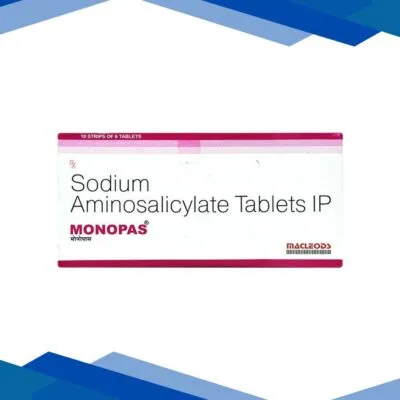



Sodium Aminosalicylate: uses, side effects, price, and other options.
Sodium Aminosalicylate, often said as PAS or para-aminosalicylate sodium, is a special second-line antibiotic used for tuberculosis. Most times it is used as one piece of a bigger, multi-drug plan, especially for people with active multi-drug resistant (MDR) TB, when the Mycobacterium tuberculosis strain is still “susceptible” to this approach.
Because it has a narrow therapeutic window, Sodium Aminosalicylate is prescription-only, and it is typically started only when first-line treatments are not possible, not working, or bacteria are already resistant.
How Sodium Aminosalicylate works, in a nutshell
Sodium Aminosalicylate targets mycobacteria through an antimetabolite effect. It disrupts folate use, folate-making steps, and the ability to keep replicating:
Folate synthesis gets blocked. Mycobacteria need folic acid to build DNA, RNA, and proteins. Unlike humans, mycobacteria must make their own folate using an intermediate chemical called Para-Aminobenzoic Acid (PABA).
It competes with PABA. The drug’s molecular shape is very close to PABA, so it blocks the bacterial enzyme dihydropteroate synthase, preventing PABA from attaching normally.
The chain reaction stops. With the enzyme blocked, functional dihydropteroate drops, and folate production basically stalls. Without folate, the bacteria cannot duplicate their DNA, so the infection stops spreading—this is usually described as a bacteriostatic effect while the immune system clears the pathogen.
Primary uses and clinical benefits
1) Multi-drug resistant tuberculosis (MDR-TB)
It is used along with other second-line antimicrobials to help clear lung disease or extrapulmonary TB that resists standard Rifampicin or Isoniazid regimens.
2) Help slowing drug resistance
Adding Sodium Aminosalicylate to an intensive medicine combo can delay resistance development, and in some cases reduce the chance of full resistance taking hold against other companion drugs.
Dosage, timing, and administration, what to follow
Tuberculosis treatment demands careful consistency, so the points below matter:
Strict schedule
Take it exactly the way your clinician says. Never miss doses even if you feel better, because irregular dosing can encourage resistant bacterial strains.
Food coordination
This medicine often irritates the stomach. To cut down nausea and stomach upset, take it with a meal, or right after eating.
Formulation handling
If you get enteric-coated granules, swallow them with water, or stir them directly into something acidic like applesauce or yogurt.
Do not crush or chew the granules. If the protective coating breaks, the drug can release too early in the stomach which makes it less effective and more irritating.
Storage check
Look at the packet color. If the granules or powder shift to a deep brown or dark purple shade, this suggests degradation. Stop using that packet and open a fresh one.
Possible side effects and body-wide changes
When you are on a second-line TB regimen, monitoring is important for both local stomach issues and broader reactions.
Common adverse effects
- Gastrointestinal trouble: nausea, vomiting, diarrhea, or persistent abdominal cramping
- Mild hypersensitivity reactions: rash, itching, or redness
- Temporary appetite decrease, or a metallic taste in the mouth
Serious side effects, get help right away
- Hepatotoxicity (liver inflammation): severe upper-right abdominal pain, dark urine, persistent vomiting, or yellow skin/eyes (jaundice)
- Severe hypersensitivity syndrome: high fever, swollen lymph nodes, and widespread blistering rash
- Hemolytic anemia: extreme tiredness, pale skin, bruising, or shortness of breath (especially in G6PD deficiency)
- Hypothyroidism: cold sensitivity, dry skin, weight gain, or neck swelling (goiter) during long therapy
Safety advice and key warnings
Parameter | Clinical status | Guidance
Kidney / Liver ❌ High caution
This drug is cleared by kidneys and processed in the liver. Regular renal and liver function tests are recommended.
Sodium loading ⚠️ Dietary warning
Sodium content is meaningful. If you have heart failure, severe hypertension, or CKD, discuss salt limits.
Pregnancy ⚠️ Use with caution
It crosses the placenta. Used only if maternal benefit outweighs fetal risk.
Antacids ❌ Avoid concurrently
Do not combine with antacids or acid reducers—they can damage the enteric coating and reduce effectiveness.
Frequently asked questions (FAQs)
Q1: Why can Sodium Aminosalicylate not be used alone for tuberculosis?
TB bacteria adapt quickly. If used alone, resistance can develop within weeks. That’s why it is always part of combination therapy with multiple drugs acting on different pathways.
Q2: What if I notice unusual stool or small beads?
Seeing small granule shells in stool can be normal—the active drug may already be absorbed. But if you also have severe diarrhea, contact your doctor.
Q3: Why are regular blood tests needed?
Long-term use can affect thyroid function, liver enzymes, and blood counts. Monitoring TSH, LFTs, and CBC helps catch issues early.
Q4: I missed a dose. What should I do?
If within 4–6 hours, take it with a light meal. If close to the next dose, skip it. Do not double dose.
Q5: Can it affect Vitamin B12?
Yes. It may reduce Vitamin B12 absorption over time. Your doctor may suggest supplements or injections during prolonged therapy to prevent anemia or nerve symptoms.