Showing the single result
Filter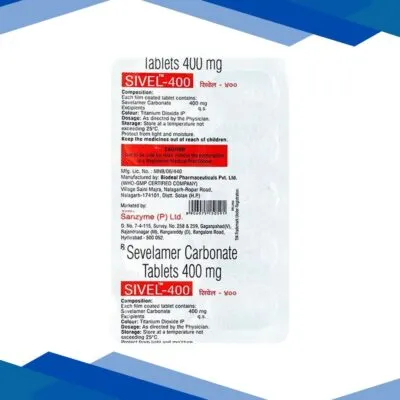
Sevelamer 400 mg / 800 mg Tablet
Sevelamer (available as Sevelamer Carbonate or Hydrochloride) is an advanced, calcium-free, and metal-free polymeric phosphate binder. It is mainly prescribed to control hyperphosphatemia (dangerously high phosphorus levels in the blood) in adult and pediatric patients with Chronic Kidney Disease (CKD) who are undergoing hemodialysis or peritoneal dialysis.
Therapeutic Class: Chronic Kidney Disease Management
Pharmacological Class: Non-Absorbed Phosphate Binding Polymers
Available Strengths: 400 mg and 800 mg Tablets / Oral Granules
Prescription Required: Yes (Rx Only)
Therapeutic Indications & Clinical Benefits
1. Control of Hyperphosphatemia
When kidneys fail they lose the ability to filter out excess phosphorus. Sevelamer effectively limits how much phosphorus gets into the bloodstream from your meals, helping to steady overall serum levels.
2. Prevention of Cardiovascular Calcification
Older phosphate binders leaned heavily on calcium. Because Sevelamer is entirely calcium-free, it can help patients avoid “calcium overload” and lower the chance of mineral deposits forming in heart valves, blood vessels, and soft tissues.
3. Comprehensive Bone Protection (CKD-MBD)
By managing blood phosphorus, this medication helps prevent the body from borrowing structural calcium out of bones. This reduces Chronic Kidney Disease-Mineral and Bone Disorder, which can help with bone pain and lessen the likelihood of sudden fractures.
4. Secondary Cholesterol Management
As a secondary clinical benefit, the polymer structure of Sevelamer attaches to bile acids in the digestive tract, which often leads to a modest reduction in low-density lipoprotein (LDL) or “bad” cholesterol.
Mechanism of Action: How it Works
Sevelamer is made from a cross-linked, non-absorbed polymer chain. It does not enter the bloodstream, and it does not pass through internal organs. Instead, when you take it right alongside food, the polymer gently expands in the gastrointestinal tract. Then, using hydrogen bonding and ion exchange, it grabs dietary phosphate molecules that are in the food you ate.
The bound phosphorus stays trapped in this matrix, passes through the digestive system without being absorbed, and exits the body with normal bowel movements.
Administration Protocols & Dosage
The Golden Rule: Sevelamer MUST be taken with or immediately after meals. If there is no food present in the stomach, it cannot bind phosphorus properly.
How to take: Swallow the tablet whole with a full glass of water. Do not crush, break, chew, or split the tablet. The internal polymer material can swell fast once moisture hits it, and that can make swallowing very difficult.
Starting Dosage: A common baseline dose is 800 mg to 1600 mg per meal, often divided as one or two tablets of the 800 mg strength with every major meal, based on your starting lab values.
Adjustments: Your nephrologist will run blood panels on a routine basis, then fine-tune the total number of tablets per day to keep your phosphorus in a safe clinical range.
Side Effects & Gastrointestinal Management
Since Sevelamer stays inside the digestive tract, most effects are localized to the stomach and intestines.
Common Side Effects:
- Constipation or unusually hard stools
- Nausea, occasional vomiting, or upper abdominal bloating
- Flatulence (gas) and mild indigestion
Serious Complications (Contact your physician immediately):
- Severe abdominal cramping with severe swelling, bloating, or hard stools (possible intestinal obstruction)
- Severe sudden stomach pain with dark, tarry stools or bright red blood
Safety Guidelines & Drug Interactions
Patient Variable
Safety Assessment
Direct Clinical Advice
Bowel Obstruction
❌ Absolutely Contraindicated
Do not take Sevelamer if you have a documented history of bowel blockages, severe motility disorders, or active intestinal inflammation.
Co-Medications
⚠️ Strict Spacing Required
Sevelamer can accidentally bind other oral medications, making them less effective. Take other drugs either 1 hour before or 3 hours after your Sevelamer dose.
Vitamin Deficiencies
⚠️ Monitoring Needed
Long-term use may reduce absorption of fat-soluble vitamins (Vitamins A, D, E, and K) and folic acid a bit. Supplements are commonly added alongside therapy.
Pregnancy / Nursing
⚠️ Caution
Even though the medication is not systemically absorbed, it should only be used during pregnancy or breastfeeding if your doctor says it is absolutely critical.
Frequently Asked Questions (FAQs)
Q. Why is it essential to take Sevelamer strictly with meals?
Sevelamer works like a direct chemical magnet for food-borne phosphorus. With an empty stomach there is no dietary phosphorus for it to bind, so it just passes through without real benefit. Then your next meal may still leave blood phosphorus levels unmanaged.
Q. Can I cut or crush Sevelamer tablets to make them easier to swallow?
No. You should never chew, crush, or break Sevelamer tablets. The active components absorb moisture quickly. If the tablet is broken in your mouth or throat, particles can expand and cause choking or stick to the esophagus lining. If tablets feel too large, ask your doctor about switching to Sevelamer oral powder sachets.
Q. How long do I need to remain on Sevelamer therapy?
If you are managing advanced chronic kidney disease or actively receiving dialysis, hyperphosphatemia tends to be ongoing. Because of that, Sevelamer is typically a long-term maintenance option. Many patients take it indefinitely with a kidney-friendly diet unless your nephrologist instructs otherwise.
Q. What specific medications are known to interact poorly with Sevelamer?
Sevelamer can seriously reduce absorption of important medications when taken at the same time. This can include certain antibiotics (like ciprofloxacin), thyroid hormone therapy (levothyroxine), heart rhythm drugs (amiodarone), and anti-seizure medicines (phenytoin). Keep a strict timeline buffer between doses.