
Showing all 12 resultsSorted by popularity
Filter
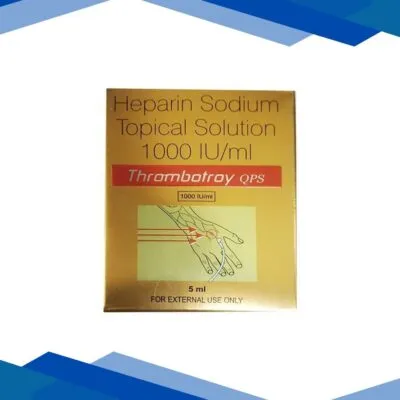
Thrombotroy Qps Solution 5ml



Heparin Injection Overview
Heparin is a prescription-level anticoagulant, usually mentioned as a blood thinner, and it works in a pretty heavy-handed way with clotting. It is most often used to avoid and manage nasty blood clots forming in veins, arteries, lungs, and even the heart. Even if Heparin cannot directly melt away a clot that already exists, it helps stop that clot from getting bigger, then lets the body, in its own time, manage the breakdown. It also helps prevent dangerous vascular obstructions, which is the whole point, really.
Key Benefits & Clinical Uses
Thrombosis Management
Helps in treating and preventing Deep Vein Thrombosis (DVT), clots in leg veins, and Pulmonary Embolism (PE), meaning clots that travel to the lungs.
Acute Cardiac Support
Used in the early care of unstable angina and acute heart attacks, to help reduce mural thrombi, meaning clots that form inside heart chambers.
Surgical Prophylaxis
Given around open-heart surgery, vascular bypass cases, and organ transplants, to reduce coagulation risk during and after the procedure.
Clinical Device Maintenance
Stops clotting inside special hardware during kidney dialysis, blood transfusions, and while blood stays in long-term IV catheters.
How It Works
Heparin basically speeds up antithrombin III, which is a protein already floating around in the bloodstream. That protein neutralizes key clotting chemicals, including thrombin and Factor Xa. By interfering with those essential steps in the coagulation cascade, Heparin lowers the blood’s ability to clot, so circulation can keep moving through compromised vessels.
Administration & General Usage
Delivery Route
Heparin is an injection, either subcutaneously (just under the skin, commonly in the abdomen) or intravenously, straight into a vein through an injection or continuous drip infusion.
Hospital Setting
Because it acts quickly and needs close observation, it is commonly administered by clinicians in clinics or hospitals.
Rotation of Sites
If it is prescribed for at-home subcutaneous use, rotate around the abdomen, so you do not end up with localized irritation, firm lumps, or bruises. Also, do not rub the area after injecting.
Common & Serious Side Effects
Heparin changes how long it takes your blood to clot, so side effects can show up.
Common Side Effects
- Mild bruising, redness, or small discomfort at the injection site
- Slightly prolonged bleeding from tiny cuts or nosebleeds
- Mild skin irritation, or a rash
Serious Side Effects (Get Medical Help Right Away)
- Signs of internal bleeding: pink or red-tinted urine, black tarry stools, coughing up blood, or vomit that looks like coffee grounds
- Heparin-Induced Thrombocytopenia (HIT): a rare immune reaction, a sudden drop in platelets with new or worsening clots, sometimes shown by sudden leg pain, swelling, warmth, or shortness of breath
- Hyperkalemia: higher potassium levels, especially if someone has diabetes or kidney problems, showing up as unexplained muscle weakness or uneven heart rhythm
Warnings & Precautions
Critical Safety Note
Heparin greatly increases bleeding risk. Do not use it if you have an ongoing uncontrolled hemorrhage, severe thrombocytopenia, meaning critically low platelets, or a prior history of HIT.
Surgeries & Dental Work
Tell your dentist or surgeon you take Heparin well before any planned procedure. It may need to be paused temporarily to prevent excessive surgical bleeding.
Injury Risk
Avoid high-impact contact sports, heavy lifting, or situations where falling or cutting yourself is likely. An electric razor and a soft-bristled toothbrush can help protect skin and gums.
Medical Interventions
It is contraindicated if you are going to receive spinal anesthesia, an epidural block, or if you just had major surgery involving the brain, spine, or eyes, because bleeding near nerve areas can become a major concern.
Medication Interactions
Always give your doctor a full list of what you currently take before starting Heparin. These require extra caution:
NSAIDs & Salicylates
Aspirin, Ibuprofen, Diclofenac, and Naproxen can raise the chance of stomach ulcers and severe bleeding.
Other Blood Thinners
Warfarin, Clopidogrel, Enoxaparin, or oral direct anticoagulants can multiply the overall anticoagulant effect.
Certain Antibiotics
Some cephalosporins can interfere with clotting-related processes when taken together with Heparin.
Frequently Asked Questions (FAQs)
Q. Does Heparin dissolve an existing blood clot?
No. Heparin does not dissolve a clot that already formed inside your vessels. It mainly stops that clot from enlarging, and it prevents new clots from starting. This helps your body’s natural defenses dissolve the clot later.
Q. Why do I get small bruises where the injection was given?
Small bruises, or a tiny firm bump, are a common response with subcutaneous Heparin. To reduce this, do not rub or massage the skin after you press the plunger. Apply gentle steady pressure using a clean piece of gauze for a few seconds.
Q. Can pregnant women be given Heparin?
Yes, but only with strict medical direction. Unfractionated Heparin does not cross the placenta easily, so it is often favored over some oral anticoagulants, for example Warfarin, during pregnancy. Still, it can influence bone density with long-term exposure and it carries bleeding risk at delivery, so close monitoring by an obstetrician and hematologist is required.
Q. What is the difference between Heparin and Low Molecular Weight Heparin (LMWH)?
Standard Heparin, also called unfractionated Heparin, is a larger molecule given by IV or subcutaneous injection. It acts fast, but it needs frequent hospital blood tests, like the aPTT test, to fine-tune dosing.
LMWH, such as Enoxaparin, is made of smaller fragments. It has a more stable effect, lasts longer, and usually does not require routine lab monitoring of blood.