
Showing all 4 resultsSorted by popularity
Filter


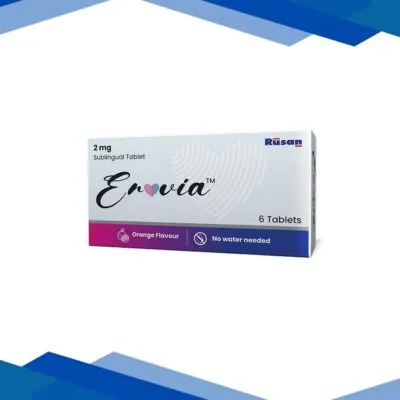
EROVIA 2 MG ORANGE FLAVOUR Sublingual Tablet 6’s
Apomorphine Hydrochloride Injection / Infusion
Apomorphine Hydrochloride is a highly potent, short-acting, non-ergoline dopamine agonist made for the acute, stop gap, intermittent handling of severe motor swings in advanced Parkinson’s disease. People sometimes call it a “rescue therapy,” and the idea is that it can quickly undo those miserable “off” moments, like when Levodopa (and other oral maintenance medicines) wear off early, or just fail in a weird unpredictable way. During an “off” episode, the patient may get stiff muscles, shaking, and a loss of voluntary control, all at once, or in quick waves.
Therapeutic Class: Antiparkinson Agents
Pharmacological Class: Non-Ergoline Dopamine Agonist
Available Forms: Subcutaneous (SC) Injection Pens, Cartridges, and Continuous Infusion Pumps
Prescription Status: Strictly Schedule H (Rx Required)
Primary Uses & Clinical Benefits
1. Fast Recovery from “Off” Episodes
Apomorphine usually begins working faster than oral tablets. When you inject it under the skin, it typically brings back movement and speech within about 4 to 12 minutes, which helps the person move back into an active “on” state.
2. Strong Dopamine Stimulation Without the Gut
It mimics missing brain chemical messengers, and it bypasses the digestive tract entirely. That’s a major advantage for patients with erratic gastric emptying, or even stomach paralysis that can show up in advanced Parkinson’s.
3. Severe Motor Fluctuation Control
Whether it’s used as a single targeted injection, or through a continuous subcutaneous mini-pump, it offers a key option to lower severe dyskinesia, meaning those erratic writhing movements that may show up after higher oral levodopa dosing.
Mechanism of Action: How it Works
Apomorphine works right at the central nervous system. It binds with high affinity to post-synaptic D2, D3, and D4 dopamine receptors, especially along the brain’s nigrostriatal pathway. In advanced Parkinson’s, natural dopamine-producing neurons have already degenerated quite a bit.
Apomorphine essentially “skips” those damaged cells and drives stimulation in the downstream motor coordination circuitry. The result is a restoration of smoother balancing pathways, improved voluntary muscle execution, and fewer sudden tremor surges or motor lockouts.
Dosage Guidelines & Clinical Administration
⚠️ Critical Safety Mandatory: Apomorphine must never be injected into a vein (Intravenously / IV). IV administration can let the drug crystallize in the bloodstream, increasing risk of life-threatening lung embolisms or blood clots. This medication is strictly for Subcutaneous use, under the skin only.
The In-Clinic Test Dose
Because it can cause a sudden and sharp blood pressure drop, the first dose must be given in a doctor’s office or clinical environment. Clinicians monitor sitting and standing blood pressure before injection, then again at 20, 40, and 60 minutes after.
Standard Starting Dose
The initial intermittent test dose often starts at 0.1 mL to 0.2 mL (1 mg to 2 mg) given subcutaneously as needed. If the patient tolerates it, and based on the clinical response, the prescriber may slowly raise the dose, up to a maximum single dose of 0.6 mL (6 mg).
Injection Sites
Rotate injection points every time: abdomen (at least 2 inches away from the navel), outer upper thigh, or the upper arm. Do not inject into skin that’s bruised, red, or firm/hard.
Crucial Anti-Nausea Pre-Medication
Apomorphine strongly activates the brain’s chemoreceptor trigger zone, which can lead to intense nausea and vomiting. To help prevent that, doctors typically prescribe an anti-nausea medicine like Trimethobenzamide (300 mg three times a day) starting 3 days before the first Apomorphine dose. This anti-nausea support is usually continued for the first two months, until the body adjusts.
Note: Standard anti-nausea choices like Ondansetron or Metoclopramide must never be used alongside Apomorphine, because they can cause dangerously low blood pressure and may worsen Parkinson’s symptoms.
Side Effects to Watch For
Even though Apomorphine is a powerful rescue agent, its dopaminergic effects can trigger side effects.
Common Side Effects
- Yawning: A fairly unique, generally harmless sign that often shows up 15 to 20 minutes after injection, suggesting the drug reached the brain successfully.
- Injection Site Reactions: Mild bruising, localized swelling, pain, or redness at the needle entry area.
- Somnolence: Increased daytime sleepiness, plus unexpected bouts of yawning and drowsiness.
Serious Symptoms (Contact Your Care Team Immediately)
- Severe Orthostatic Hypotension: Intense dizziness, lightheadedness, or fainting (syncope) when standing up too quickly.
- Psychiatric Disturbances: New or worsening hallucinations, confusion, intense paranoia, or sudden aggressive behavior.
- Impulse Control Disorders: Development of intense urges that feel hard to resist, like compulsive gambling, binge eating, or hypersexuality.
- Priapism: Rare but dangerous, involving a prolonged painful erection for more than 4 hours, and without sexual arousal. This needs immediate emergency room evaluation.
Safety Diagnostics & Contraindications
| Patient Risk Profile | Regulatory Status | Clinical Guidance |
|---|---|---|
| 5-HT3 Antagonists (Ondansetron) | ❌ Absolutely Prohibited | Never combine Apomorphine with antiemetics like Ondansetron, Granisetron, or Palonosetron. Combining them can cause a profound, life-threatening blood pressure drop and loss of consciousness. |
| Sulfite Allergies | ❌ Contraindicated | Many formulations contain sodium metabisulfite. If you have a known sulfite sensitivity, or asthma that flares with sulfites, this drug can trigger severe, life-threatening allergic or asthmatic reactions. |
| Alcohol Intake | ⚠️ High Caution | Avoid alcohol completely. Mixing alcohol with Apomorphine can strongly worsen central nervous system depression, causing deeper drowsiness and higher fall risk. |
| Cardiac Conditions / QT Prolongation | ⚠️ High Caution | Apomorphine can prolong the QT interval, affecting the heart’s electrical rhythm. If a patient has low potassium, or a history of irregular heartbeats, extra monitoring is needed. |
Frequently Asked Questions (FAQs)
Q. Is Apomorphine an opioid or narcotic painkiller?
No. Even though the name includes “morphine,” Apomorphine does not act on opioid receptors, is not addictive, and is not a narcotic painkiller. It is a dopamine agonist, and here its role is to restore physical movement in Parkinson’s disease.
Q. How long does one injection provide relief?
Since it’s designed as a rapid rescue medication, it doesn’t last long in the body. The “on” improvement usually begins within about 10 minutes and provides better motor control for roughly 45 to 60 minutes.